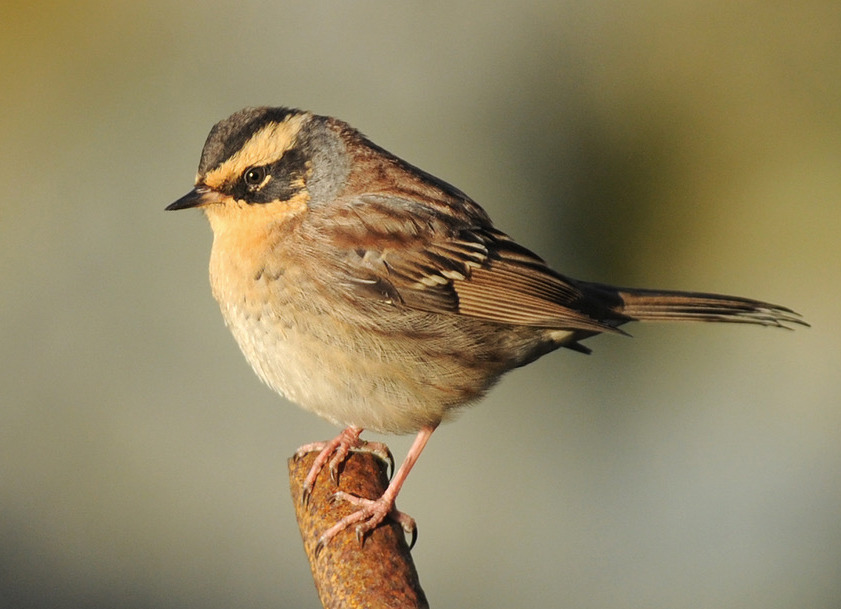
Sunday, 27 November 2016

Randoms

Sunday November 27

I haven't posted for ages. Not because we haven't been birding, we have, twice a week after mothing and several short outings to Winterton and Ludham Marshes. Mothing has now finished for the winter. We were still finding 30+ moths in the four traps at Natural Surroundings but none or one at Cley. The moths were repetetive and of limited species too.
A Greenshank at Morston was the week's highlight. 
One drive at Felbrigg found a clump of mushrooms on a tree stump beside the entry road. We weren't able to stop long, too much traffic. I believe that the main clump is Deer Shield but cannot convincingly identify the smaller, umbrella shaped fungi on the left.

We still have skeins of geese flying over the village. To-day, about two thousand Pinks flew over and we actually found them on the ground in two fields on the way to the main road. I tried to scan the very spooky flock, they didn't like us stopping, nothing different in the short time I was able to look.
We then drove to Ludham via Winterton on a very grey afternoon with few birds about.  Hundreds of Lapwing at both sites plus a large 2k flock of Golden Plover over Thurne.
A partial rainbow over Thurne produced an eerie effect.


These different shaped and formed rainbows all have particular names, I don't know about this one.
Still no Bewicks or Whooper Swans around, I would expect some by now. 
A delightful cameo..... I noticed a Chinese Water Deer in the far corner of a pasture as we left St Benets. Scoping it in order to make sure that it wasn't a Muntjac, it lowered its head and something brown leapt into the air. There followed five minutes of fun.The deer would pretend to be uninterested before quietly getting nearer to the hare, extending its head slowly for a sniff. Noses actually touched on one occasion, both animals jumping vertically and backwards a foot simultaneously. Occasionally, the deer would do a skittish little pronk and run before returning to continue the face to face. The Hare just faced it out until the deer tired of his game and wandered off.

Thursday, 10 November 2016

More Waxwings

Thursday November 10

Zero moths in the Cley Centre trap this morning. Greg held the opening until a couple of minutes to ten - the cafe opens at ten.
It had stopped raining but the sky was pewter grey, the light appalling. A real test for my new lens, which I was field testing for the first time. A Tamron 150-600mm zoom. Hand held with the ISA raised to 600.
 What would we find at Beach Road to-day? The flock of Brent Geese held two newly in Barnacle Geese and a single adult Pale-bellied Goose.  I tried the lens out on the distant Barnacles.


Then, on a Common Gull and a Lapwing.


We had to be patient and I succeeded in a short view of one of the Short-eared Owls hunting west of West Bank.
News of Waxwings at Holt, a short distance from Cley, sent us off to look for them. We found the one parking place in the school road and waited....... Not long, before a group of 8 Waxwings flew into the top of a tall tree at the end of the road. 


I walked nearer and a few flew down into a Rowan tree, against what little light there was. Delightful birds.


Back to Cley Beach road where the geese were even further away but Pam was able to get her glimpse of a Short-eared Owl.
Why now ? The sun came out and the whole day looked different. We had one of Julian's hot chocolates, no birds of note, before driving home in time to put the moth trap on at dusk. We had one Feathered Thorn this morning and a host of midges.
Lens verdict?
Impressive in the lighting conditions, not expensive either.


Wednesday, 9 November 2016

Wot, No Moths, some Birds

Tuesday November 8

After several days of chilly wind and torrential showers, I was not hopeful of finding much in the moth traps at natural Surroundings this morning. I was not wrong. The highlight was three different variations of Mottled Umber, a real pitfall for the inexperienced. Apart from this, just one Satellite and a Chestnut.
 I didn't take my camera down, Pam did. here's two of the Mottled Umber.


A good attendance this morning, despite the parking warning re a group of 30 walkers turning up at 10.30. The parking is very limited. A and A are off to Oman to-morrow but still turned up. Andy was there too after his 300 mile cycling week with his wife. He joined K and M and us for coffee afterwards and was as entertaining as always. His account of a 90+ uncle who owned a 2,000 acre farm of prime arable land in Yorkshire, taking up with ' a prostitute from Wakeham and leaving the farm to her'  was an example. I liked the hoarder uncle who wore a Sikh turban whilst riding his scooter too. When challenged by police he justified it by saying that Sikhs could do it, so could he.

Home via Cley as always. We both saw a close Great Northern Diver from beach car park followed by two Little Grebes in the western dyke ending at Salthouse Duck Pond.


Nothing of note along Salthouse beach road, apart from Julian's delicious hot chocolate, until a second winter Glaucous Gull flew along the dune top, giving us extensive views. David N and John F joined us for a chat, David had seen it pass Sheringham earlier . A lucky look by Pam.
Home via Sainsbury's to spend 8p off a litre of petrol voucher to fill an almost empty tank. We only had to buy £15 worth of clothes to attain the voucher ......Easily done, Pam needed another pair of denims.
Home to see if my new lens had arrived. A Tamron 150-600 mm zoom which has had good reviews.Not expensive either and relatively light in weight. At least I can use it from the car.

Sunday, 6 November 2016

In Search of Waxwings

Saturday November 5

What a day to choose. Stormy northerly winds, the torrential squally showers almost continuous. Towards the afternoon, some contained nearly fully formed hail. 
The journey west was almost birdless. The road down to Sculthorpe Mill completely so, a particularly heavy shower brought a hasty retreat. At the end of the road, the sun came out. Back down to the Mill, an incredible experience. A huge wind squall from behind the car enveloped us in yellow, brown and orange Autumn leaves. It was like a colour blizzard. The leaves continued to roll across the car park like a fast retreating tsunami. 
This became the pattern of the day. Rain followed by short spells of blue sky and sun which were small oases in a mass of purple-grey cloud with the occasional partial rainbow.
A field at the entrance to Valley Farm Lane held a few Redwing, Fieldfare, Red-legged Partridges, two hares and one Mistle Thrush. My partially open window still let in enough wet to soak my left leg. Wiping down the car surfaces was a good thing, from  the amount of dirt showing on the tissue.
Abbey farm approach lane held no birds at all, the view from the hide only a few Teal and Mallard. Not even any Greylag to-day. Two Common Buzzards drifted across a far field, hassled by the ever present corvids.
As we were giving Snettisham a miss, we drove down to the sea front car park west of Hunstanton town, soon after Tesco. The sea was still pounding the walkway, no chance of waders there. Until two surprise Purple Sandpipers flew past, close in.
The sea was sensational, as was the skill of the sail boarders negotiating the turmoil. I couldn't resist a few photos, the sails are so colourful.


A short scan from the cliff top only produced Gannets. Where were the reported Auks etc that came through on the pager? 
Anticipation rose as we neared Holme NOA and NWT approach track. The toilet block parking places were full, birders wandering around the parking area opposite. Many were leaving. We left too, to drive down to the nature reserve, scanning all the bushes and trees, hearts leaping at every starling flock. The horses were backsides in to a thicket, trying to escape the weather. The birds must have been somewhere doing the same thing.
Back to the toilet block where we only waited about twenty minutes before a small flock of Waxwings flew into a bare tree opposite the toilets. Waw. Pam couold see them from her window. I got out, using the car as a shield and saw them fly down into the hawthorn hedge to feed. I'd only managed a couple of photographs when a youngish man, wielding a giant lens, appeared in the open alongside me. 

Shaky hands....
 The birds flew back, high into the tree. 'Was that me?' he said. I did not answer.
My other pics are of groups in the tree, thick branches making focusing difficult for my camera. 


Kevin the Teenager?


By now, the tree was engulfed by birders and photographers. No chance of them coming down again.
Pam counted about 27 birds, the other reported 40+ not present this time. We did see several groups fly distantly. Magical birds which never fail to take my breath away. Charismatic and beautiful, a true birders' bird. They also bewitch the general public.

Early afternoon and already drawing towards evening light. Blasted clocks going back. We drove home via Titchwell to pick up a late lunch before eating our sausage and onion baguette at Brancaster Staithe. Most of the boats have gone for the winter. Bar-tailed and one Black-tailed Godwit fed on the 'mound'. Humpy Grey Plovers did their dots and dash food hunt and the Turnstones and gulls fed on a half loaf of white bread left by a visitor. It's bad for you boys and girls. 
One of the Bar-tails was incredibly pale, apart from the leg colour and bill, it looked like a winter Greenshank.

Various pretty unproductive calls along the coast, apart from a Kingfisher flying along the Salthouse Beach Road drain.
I kept an eye on the pager for news of the Tree Swallow at Minsmere. We missed the St Mary bird by two days. Could I hope for a visit to-morrow?

Sunday November 6

The Tree Swallow was seen early morning before flying off south. Disappointment. One should always go on Day 1, I bet P did.

One Hour's Chill

Thursday November 3

Immediately after moth-ing at Cley - and tea and a scone - we joined many of the other moth-ers on top of the shingle bank at Coastguards. 
I find it difficult to focus when several others are calling out birds seen. Do I stop what I'm doing and try to follow their directions?  Or, do I do my own thing? I ended up doing a mixture of both. The initial panic of missing stuff - which one does anyway when the birds are fast, distant blobs and there aren't any ID points apart from far out wind turbines and moving ships - relaxes to finding one's own. Not to mention lobster pot flags which I tried to memorise, in addition to the number and placements of the groups of turbines .
David N's shout of 'Woodcock coming in, straight towards me', did produce a view of a shattered bird only just managing to raise itself to clear David's head by a centimetre or two.
An incoming Blackbird was knocked down and taken by a Greater Black-backed Gull. Nature. That did produce some expletives from Ian. There was a regular incoming of thrushes too.
I saw at least ten Little Auks and missed half a dozen, other Auks - where I only identified Guillemot - a Red-necked Grebe, many Gannets of all ages, one Goldeneye, two small skeins of Common Scoter  and two Red-breasted Mergansers. I missed the calling Snow Bunting (hearing aids not in) and everyone, apart from Greg, missed the Puffin which passed when we were fixated by the kamikaze Woodcock.
A very enjoyable hour after which we all departed for the warmth of the car. The wind was cutting.

Sunday, 23 October 2016

This and That

Sunday October 23

On Sunday, October 9th, an Email from Greg alerted us to a Norfolk first moth at Judy and Giles Dunmore's in Beeston.  We waited until the afternoon - after yesterday's long day for the Sibe Accentor - and eventually found their house on Beeston Bump. Worth it for the lovely Cypress Carpet. I had to take it in the pot as others had yet to see it, a poor excuse for a less than good photo.

First found on the south coast in 1984, it's gradually making its way north. 
Dot and Steve arrived, having been alerted by Dave H and Christine who had been told by Dave N !!  D and C get everywhere.......often uninvited.

After Moths

We always go home via Cley. 
Beach Road where we've seen a Wheatear and a Stonechat 
Iron Road for a few Eurasian Whitefronted Geese.

We've had flocks of Grey Geese flying over our house for a couple of weeks, I love their flight contact calls, we always go out to watch them.  


Last Wednesday, the 19th, Pam found the flock a quarter of a mile away  in fields either side of the church loke, off the North Walsham Road. We drove part of the way down the loke, without disturbing the birds, so that I could scope the flock. At least 800 Pink-feet fed my side. Amongst them,  I identified two definite Greenland White-fronts in the nearest group, the others were too well hidden to be sure. Their orange beaks and dark breasts gave them away. Pam found one definite Eurasian Whitefront in the smaller flock on her side 

Friday October 22

The Winterton run yielded very little. We drove via Happisburgh, Eccles, the back road to Sea Palling, Somerton and Winterton Beach. No flocks of geese and an empty sea apart from one Shag
The return journey, north of Somerton, we stopped to search and I found a Peregrine sat on the ground, preening.

Saturday October 23

Another pretty birdless outing. Ludham Marshes this time. A small flock of Fieldfare with a few Redwing were the only birds seen. 

Time to watch Man U play Chelsea, fingers crossed tightly. 

Tuesday, 18 October 2016

Siberian Accentor - So Far - Plus 2 More For the UK

Dutch Birding article


Update: Unprecedented influx of Siberian Accentors in Europe

17 oktober 2016  ·  Łukasz Ławicki  ·  5567 × bekeken
Unbelievable! 59 Siberian Accentors Prunella montanella have been recorded in northern Europe (outside Russia) within 13 days (4-16 October 2016)! No doubt this is not yet the end of this amazing influx and I am certain that in the next days other individuals will turn up. An astonishing amount of 12 more birds were discovered on Friday 14 October!
October is a great time for rarities in the WP. In recent years, we looked at the Azores for the most extraordinary vagrants, coming from North America. But in this autumn, our attention focused mainly on rarities from Siberia. Large numbers of rare warblers, thrushes and buntings daily enthused many observers. However, probably no one expected an influx of Siberian Accentors, as the previous one was found... five years ago!
Siberian Accentor Prunella montanella, Scousburgh, Shetland, Scotland, 10 October 2016 (Rebecca Nason)
The first turned up on 4 October and stayed also the next day at Peijonnsuo in Finland (the country's 12th record, and the first since 12 years!). After two days, another individual was reported from Rödkallen in Sweden (the seventh, and the first since 16 years!). On 9 October, the next two birds were found - another one in Finland and, in Shetland, the first for Scotland and Britain! Amazing but that was not yet the end of it! In the following four days as many as 20 individuals were seen: two on 10 October (both in Sweden), two on 11 October (Sweden and Finland), seven on 12 October (four in Sweden, two in Finland and the first for Germany on Greifswalder Oie, Mecklenburg-Vorpommern) and nine new ones on 13 October (three in Sweden, three (including two new birds) on Greifswalder Oie, Germany, one in Finland, one at Easington, North Yorkshire (the first for England!), one at Hel, Poland (the country's second) and one trapped on Christiansø (the second ever for Denmark). 
Today an astonishing amount of 12 new birds were found. Including the first for Estonia, the second and third record for Lithuania , the third for Poland, a new bird in Finland and an amazing seven new birds in Sweden. Of this total of 36 Siberian Accentors in 11 days, eight were trapped (and ringed); as of 14 October, the totals of this 2016 influx stand on 18 for Sweden, seven for Finland, three for Germany, two for Britain, Poland and Lithuania and with singles in Denmark and Estonia. Wow!

Siberian Accentor Prunella montanella, Hel, Poland, 13 October 2016 (Marcin Sołowiej). The second for Poland!
Siberian Accentor breeds on both sides of the Ural mountains and in Siberia, mostly north of the Arctic Circle. Its winter grounds are in south-eastern Asia: from southern Manchuria, Korea and Japan to central China. In autumn, it is also frequently recorded as a straggler in Alaska, USA. In Europe, there were c 32 records up to 2015, of which more than half in Finland and Sweden. The species has also been recorded in Austria (19th century), Italy (1863, 1884, 1901), Czechia (1943), Greece (1965), Poland (1988), Denmark (1992), Slovakia (1994), Belarus (1997), Lithuania (1998), Luxembourg (2005), Turkey (2006, 2007) and Norway (2011).The vast majority of these records are from October.
So, this year's influx doubled the total number of records in the previous 100 years! And, maybe, there will be a FIRST for the Netherlands as well...